

From one beginner workshop brief to posts, images, and a short video: …
페이지 정보
작성자 Astrid 작성일 26-09-26 14:24 조회 7회 댓글 0건본문
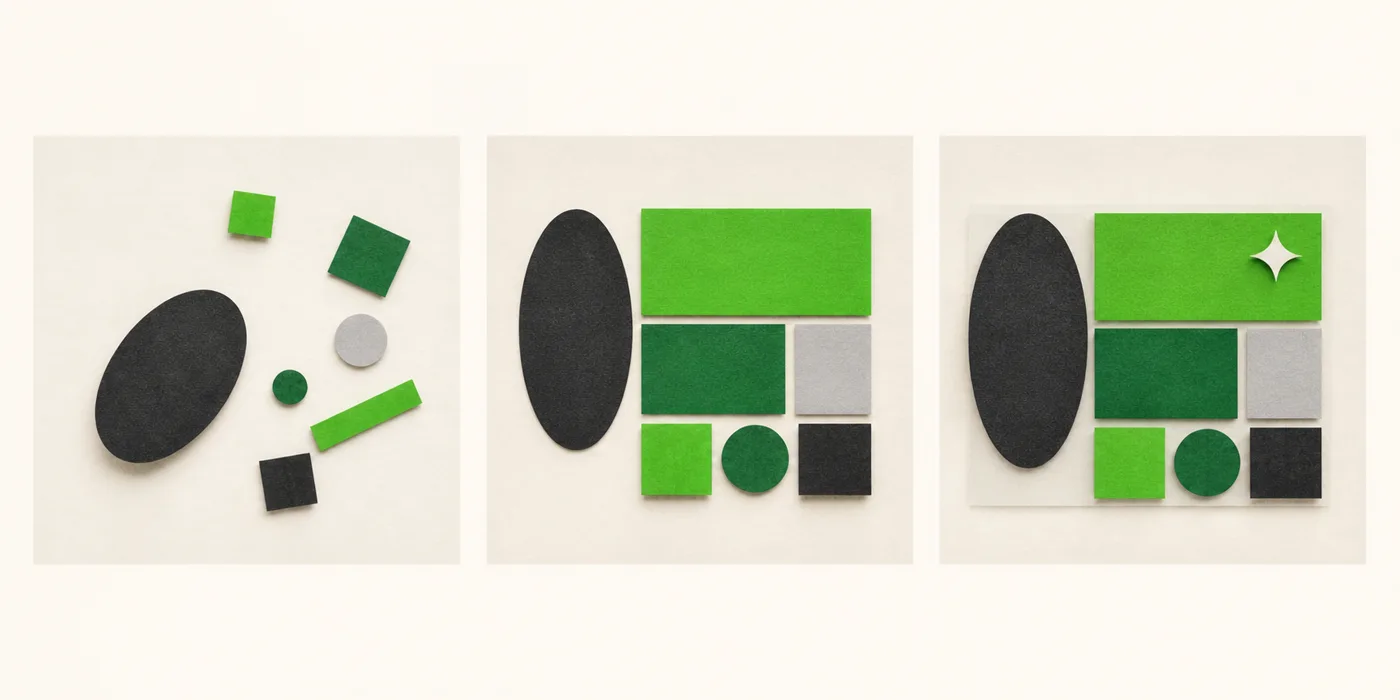
A launch slot has opened for the beginner workshop, leaving the ceramic studio with little production time. The work must make sense to first-time makers on a phone and lead naturally toward the choice to book a class. The producer organizes the assignment around deadline triage and uses a common buying hesitation as the first point of recognition.
A weak route would mention a common buying hesitation repeatedly without showing its effect on a real choice. Likely failure patterns are named in advance: prompt churn, inconsistent subjects, and accidental text. The warning changes the writing route, visual prompt, motion plan, and final review.
The planning sheet translates that search language into its underlying job: to move from a written idea to a controlled visual set. The acceptance test is repeatable compositions with room for real typography; speed alone is not an outcome. The phrase guides the job, but the beginner workshop stays as the one illustrative case.
The working brief fits on one page: the ceramic studio is promoting the beginner workshop to first-time makers, and the single communication goal is to book a class. Voice guidance says tactile and welcoming, while the facts column holds timing, price, eligibility, fulfilment, and contact details. Guarantees and implied affiliations stay out. Production fields cover exact spelling and case, included and avoided words, sensitive claims, source permissions, a 4:5 master crop, mobile margins, a 30-second limit, formats, owners, and publishing time. Confirmed facts, open questions, and illustrative examples occupy separate columns.
For the image route, the single job is to show the service in use without staging a testimonial. The prompt describes the beginner workshop as subject, a foreground-to-background composition, one focal point, a restrained contextual background, cream, charcoal, and muted red, soft directional light, and a 4:5 frame. No essential detail enters the mobile crop or caption-safe margins; real copy is added later as an editable layer. 'Quiet Start' and 'First Things First' are hypothetical options for internal layout testing, not claims of availability or proof.
Drafting begins with editorial routes so the team can choose an argument before polishing sentences. The route board contains a common error tied to a common buying hesitation, a compact workflow, a comparison, and a process note grounded in the ceramic studio. The deadline triage objective favors the route with a visible action, a defensible claim, and an honest path to book a class.
The schedule also reserves enough time for correction, source checks, and another careful final reading before any finished asset is queued. Production begins with the smallest complete set for the beginner workshop: one master message, one adaptable composition, one caption family, and one timed demonstration. Variants wait until the owner approves the chain; otherwise one unsupported assumption can spread through many exports and consume the review budget. A tracking row lists each asset, its purpose for first-time makers, source fact, format, status, next reviewer, and relationship to the action to book a class. After a small release, the owner compares observable signals chosen in advance, such as completed inquiries or saves, while keeping exposure and time period visible. The result informs the next deadline triage decision but is not presented as universal proof, a guaranteed lift, or a customer testimonial. Version control is deliberately plain: drafts receive descriptive names, approval is written down, and obsolete exports move out of the active folder so nobody publishes an attractive but rejected file. Each exported derivative is opened in context before release, catching platform compression, unexpected cropping, unsafe captions, broken links, or a reordered message that the working file did not reveal.
One route branches into the explanatory post, short caption, hook, carousel sequence, spoken script, and title choices. The five cards move from audience problem to required facts, illustrative choice, human check, and the action to book a class. Unknown details are returned as questions rather than filled with plausible specifics. A line stays only if it provides a method, example, criterion, or risk that changes the work.
The short video stays with one question for 30 seconds: what must the ceramic studio decide before producing the set? For three seconds, voiceover names a common buying hesitation, screen copy stays under five words, and the camera shows real planning notes after private details are removed. Shot two collects inputs for four seconds; shot three shows the illustrative choice for six; shot four pauses on a human correction for five; shot five uses the remaining time for the approved next step. The shot sheet separates voiceover, on-screen text, direction, duration, source or assumption, and review note into six columns.
Platform adaptation begins from the approved message, not from pasting one caption into different boxes. The written channel preserves the decision process, the image channel leads with the clearest frame, and the carousel reveals one step at a time. The vertical clip puts a common buying hesitation in the first two seconds with large captions; a longer video retains the example and source notes; a community post asks one focused question before inviting people to book a class.
First, a person verifies claims and changing rules with current primary sources, notes the date, and confirms that wording fits the audience and stated voice. Artwork is inspected at 100 percent and in place for text, symbols, hands, repeated objects, edges, light, interface plausibility, unintended marks, phone cropping, contrast, and reading order. A cold reviewer watches for changing objects, warped text, https://lunalisa.pro caption errors, unsafe margins, mispronunciation, uneven pace or audio, weak boundary frames, and lost meaning without sound. Final approval is recorded when the formats hold the same facts, maintain the stated tactile and welcoming tone, and make the next action appropriate for first-time makers.
Handoff keeps approved inputs, copy route, working text, layered design, captions, shot table, source notes, and checked exports under distinct names. With one source of truth, the producer can change a detail and identify every affected placement. For the ceramic studio, the value is a smaller, reviewable set that gives first-time makers one consistent reason to consider the beginner workshop.


